Guide · Blower Parts
Blower Health and Safety Guide
2,279 words · published 2026-09-26
Machine class: petrol blowers only. This guide covers handheld and backpack two-stroke blowers in the Stihl BG and BR class, Husqvarna 125B, 130BT and 350BT class, and similar machines. Chainsaws, brush cutters and trimmers carry different hazards — blades, kickback and cutting attachments — and their own guides. Do not apply this guide to those machines.
Safety disclaimer. This is general guidance, not a substitute for your machine's own manual or for proper training. Where a figure would be specific to your machine we have not invented one; health and safety exposure limits for noise and vibration are published by national bodies and should be consulted directly. Pentales Agro is an independent distributor with no Stihl or Husqvarna agency.
The two hazards people underestimate on a blower are the two that cannot be seen: noise, which damages hearing permanently and painlessly, and dust, which the machine deliberately puts into the air at head height — including the dust it has just lifted off the ground.
Personal Protective Equipment
Blower PPE is lighter than chainsaw or brush cutter kit, but two items are non-negotiable and one is commonly skipped.
Hearing protection is essential, not optional. A petrol blower is one of the loudest machines in grounds maintenance work, and it is typically run for long continuous periods at close range. Wear defenders — muffs generally suit a blower better than plugs because they also reduce sound transmitted through the skull — and wear them whenever the engine runs, including while you stand holding an idling machine. Hearing loss from machinery is permanent and cumulative, and by the time it is noticeable it is irreversible.
Eye and face protection. The whole purpose of a blower is to move material at speed, and it throws fine debris, grit and dust at the operator as well as away. Safety glasses or goggles are the minimum; a face shield is better where the material includes grit, gravel or hard fragments, because those rebound off the ground and come back into the operator's face.
Respiratory protection. A dust mask or respirator is the item most often omitted and the one with the clearest justification. Blowing leaf litter lifts mould spores, dried animal faeces, road dirt and fine mineral dust into the air the operator is standing in, and it does so at head height. In dry-season conditions, or when working with material that has been sitting damp and then dried, a fitted particulate mask is sensible protection rather than an overreaction.
Gloves and footwear. Gloves for grip, vibration and minor abrasion. Closed, substantial footwear with grip — not sandals — because blower work involves walking backwards over uneven ground and stepping around material that was just moved. Long trousers and a long-sleeved shirt limit skin exposure to dust and to the exhaust side of the machine.
High-visibility clothing where the work is anywhere near vehicles or machinery, and always for roadside work.
Airborne Dust, Exhaust and Air Quality
A blower has two exhaust streams: the air you are moving deliberately and the engine exhaust. Both affect air quality, and both are manageable.
Recognise what is in the dust. Leaf litter and grass cuttings hold mould and fungal spores when they have been damp and then dried. Roadside dirt and soil contain fine mineral particles that reach deep into the lungs. Animal droppings are a real and common component of yard and paddock litter, and they are a hygienic hazard as well as a respiratory one. This is the reason a blower is not a harmless tool: it concentrates these materials into a cloud at the operator's head height.
Never work in an enclosed or poorly ventilated space. An engine's exhaust contains carbon monoxide, which is odourless and causes drowsiness, collapse and death in enclosed spaces without the operator noticing the danger. A blower must never be run inside a garage, shed, warehouse or any confined area, even with a door open. Carbon monoxide accumulation is the kind of hazard that produces a casualty who never realised they were at risk.
Keep your head out of the dust cloud where you can. Working with the wind, or with the direction of blow, moves dust away from the operator, while working into still air leaves the operator inside the cloud they have created. Plan the direction before starting, and reposition rather than pushing through.
Do not blow dust towards others, and do not work above someone else's breathing zone. This applies to colleagues, residents, pedestrians and anyone else nearby. Stopping the machine while someone passes is easier than explaining why their child is coughing.
Stop and move if you cannot see clearly. Working in your own dust cloud impairs your vision and your judgement as well as your lungs, and you have lost sight of whatever is on the ground beneath the tube.
Where dust is unavoidable and heavy, consider whether the job needs a blower at all. Wet or heavily soiled material, or material with significant hygienic risk, is better collected than blown, and this is a decision to make deliberately rather than by default.
Noise: The Most Underrated Blower Hazard
Noise is listed separately because blowers cause it at a level and duration that exceeds most other handheld equipment, and because it does its damage without pain.
Understand the exposure. A petrol blower runs loud enough that unprotected exposure causes permanent hearing damage over repeated use, and blower work is typically continuous rather than intermittent — a leaf clearance job is measured in hours, not minutes. Hearing loss from this kind of exposure is painless, gradual and irreversible. There is no repair and no hearing aid that restores it fully.
Protect for the whole session, not just the loud parts. Taking defenders off to talk, to answer a phone or to move between areas is the common pattern that defeats the protection. Wear them for the duration, and step away from the machine if you need to talk.
Do not assume distance solves it. Standing a few metres from a running blower is still a significant exposure. If you are supervising an operator working with a blower, you need protection too.
Watch for warning signs and act on them. Ringing or buzzing in the ears after a work session, or the sensation that everyone is mumbling, means the exposure was not adequately controlled. Repeated episodes at that level lead to permanent loss. Treat it as a signal to improve protection rather than as a normal end to a working day.
Consider the effect on others. Blower noise carries a long way and is intrusive, especially in residential areas and early in the morning. Beyond the courtesy, sustained community noise complaints are the route to restrictions on when blowers can be used, which is a practical reason to work within reasonable hours.
Safe Starting, Carrying and Shutdown
Starting and carrying a blower are the phases where the machine is least controlled, and where a blower's particular shape — a long tube on a running engine — creates its own risks.
Start on firm, clear ground. Place the machine on the ground for a handheld blower, or put a backpack machine on before starting. Keep the tube clear of your body and pointed away from anyone else, and keep the discharge away from loose material that will be thrown the moment the engine runs.
Never start a blower while pointing the tube at a person, a vehicle or a window. The machine makes immediate, forceful airflow on starting.
Do not start a blower indoors, and do not run one inside a vehicle or a closed trailer.
Carry a handheld blower correctly. Stop the engine for any carry beyond a step or two rather than walking with it running, and carry it by the handle with the tube forward and down, keeping the hot muffler away from your leg and the tube away from anyone behind or beside you. Never carry a running machine at shoulder height.
Put a backpack machine on before starting and take it off after stopping. Fitting an already-running backpack blower means putting a hot engine with a spinning fan against your own back with one hand, and it is a common cause of avoidable burns and strain injuries.
Check the throttle and stop switch after starting. Confirm the trigger returns and the machine stops promptly. If the stop switch does not work, stop using the machine until it is fixed.
Shutdown deliberately. Release the throttle, let the engine return to idle, then use the stop switch. Do not stop the engine by pulling the tube off or by blocking the intake. Set the machine down with the muffler clear of dry vegetation, because a hot muffler laid in leaf litter is a fire risk.
Let the engine cool before putting the machine away in a vehicle, a shed or beside fuel. A hot muffler and a fuel container in the same enclosed space is a combination to avoid.
Working Around People, Traffic and Enclosed Spaces
A blower is the machine most often operated around the public, and the working environment is part of the safety system.
Keep everyone clear of the discharge direction. Debris leaves a blower tube fast enough to injure an eye or a face. Stop the machine when people are within the working area rather than expecting them to judge the risk.
Never work with your back to live traffic. Roadside blower work puts the operator in a vulnerable position with a machine they are holding rather than a machine they can step away from. Where the site requires traffic management, it must be in place first.
Watch for what you are pushing towards. Leaves and cuttings blown into a road or a drain create flooding and skid risks that arrive later than the injury hazards and last longer. Aim material away from drains, watercourses and carriageways.
Do not use a blower to clear around machinery, vehicles or electrical equipment where debris can be driven into vents, air intakes or enclosures. Blowing dust into a vehicle engine bay or an electrical cabinet causes damage that has nothing to do with the ground you were clearing.
Be careful around water and wet ground. Wet leaves, algae and mud are slippery, and a blower is used while walking with limited vision of the ground immediately beneath and behind you. Wear grippy footwear and avoid walking backwards over wet surfaces.
Do not work alone in heat with a blower for long stretches without water. This is the machine most likely to be used continuously through the middle of the day, and continuous work in Mauritian humidity while wearing defenders and a mask carries a real heat-illness risk.
Vibration, Fatigue and First Aid
Blower vibration is lower than a chainsaw's but is applied continuously and often through a mask and defenders that already obscure the operator's awareness.
Hand-arm vibration. Long continuous blower use transmits vibration to the hands and arms. The early signs are tingling, numbness or a whitening of the fingertips after work, which is still reversible by reducing exposure. Manage it by keeping the anti-vibration mounts in good condition, keeping the grip relaxed, and taking breaks that let circulation recover. For daily occupational use, the published daily vibration exposure limits should be known and managed deliberately.
Fatigue and heat. A blower session is longer and less interrupted than most other power-tool work. Pacing matters: rotate tasks, work the heaviest areas in the cooler parts of the day, and drink water through the session rather than at the end of it.
For dust or debris in the eye. Do not rub the eye and do not try to remove anything embedded in it. Irrigate with clean, low-pressure water and get medical care if the irritation does not settle quickly or if vision is affected. Blown grit and small fragments are a common cause of corneal abrasion, and it needs treatment rather than persistence.
For suspected carbon monoxide exposure. If anyone working with or near a running engine indoors develops headache, dizziness, nausea, drowsiness or confusion, get them into fresh air immediately and call for medical help. Do not send them back in to switch the machine off. In Mauritius the national emergency numbers published by the Prime Minister's Office are Police 999, Mauritius Fire and Rescue Service 115, and SAMU (ambulance) 114.
For a blow to the eye or face from a nozzle or tube. Stop the machine and assess for bleeding and for vision changes. Any loss of vision, double vision or persistent pain after a blow to the eye needs medical assessment.
For burns from the engine or muffler. Cool the burn with clean, low-pressure water for as long as comfort allows, do not apply oils or creams, cover it loosely and seek medical attention for anything beyond a small superficial burn. Backpack blowers put a hot engine close to the back pad, so check the heat shield is fitted.
Prepare before you work. Carry water, know where the nearest medical facility is, and make sure someone knows where you are working. On long clearance jobs, a charged phone and a first aid kit with eye irrigation are the two items that make the most difference.
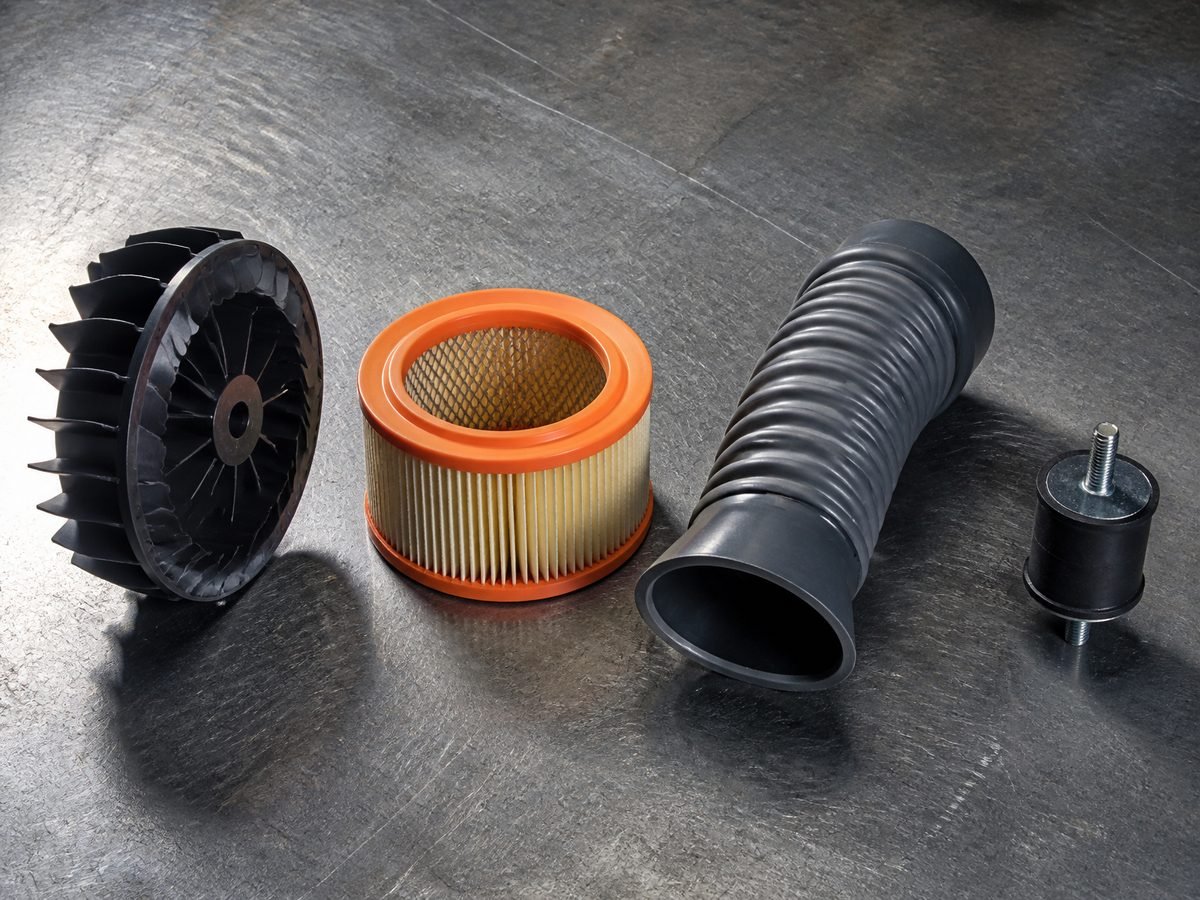
Replacement anti-vibration mounts, back pads and harness parts, air filters, carburettor kits, stop switches and tubes for Stihl-class and Husqvarna-class petrol blowers are listed in our blower parts catalogue. Hearing defenders, respirators and other protective equipment are not sold through our parts catalogue; buy them from a supplier who can state the standard and the attenuation or protection factor they meet, because unrated equipment may give less protection than its appearance suggests.
Browse Blower Parts · Ask us about a repair · All 13 guides
Pentales Agro is an independent distributor. We hold no Stihl or Husqvarna agency, and brand names appear only to describe which machines a part fits.