Guide · Blower Parts
Blower Precautions Guide: What to Avoid Before Something Breaks
2,335 words · published 2026-09-26
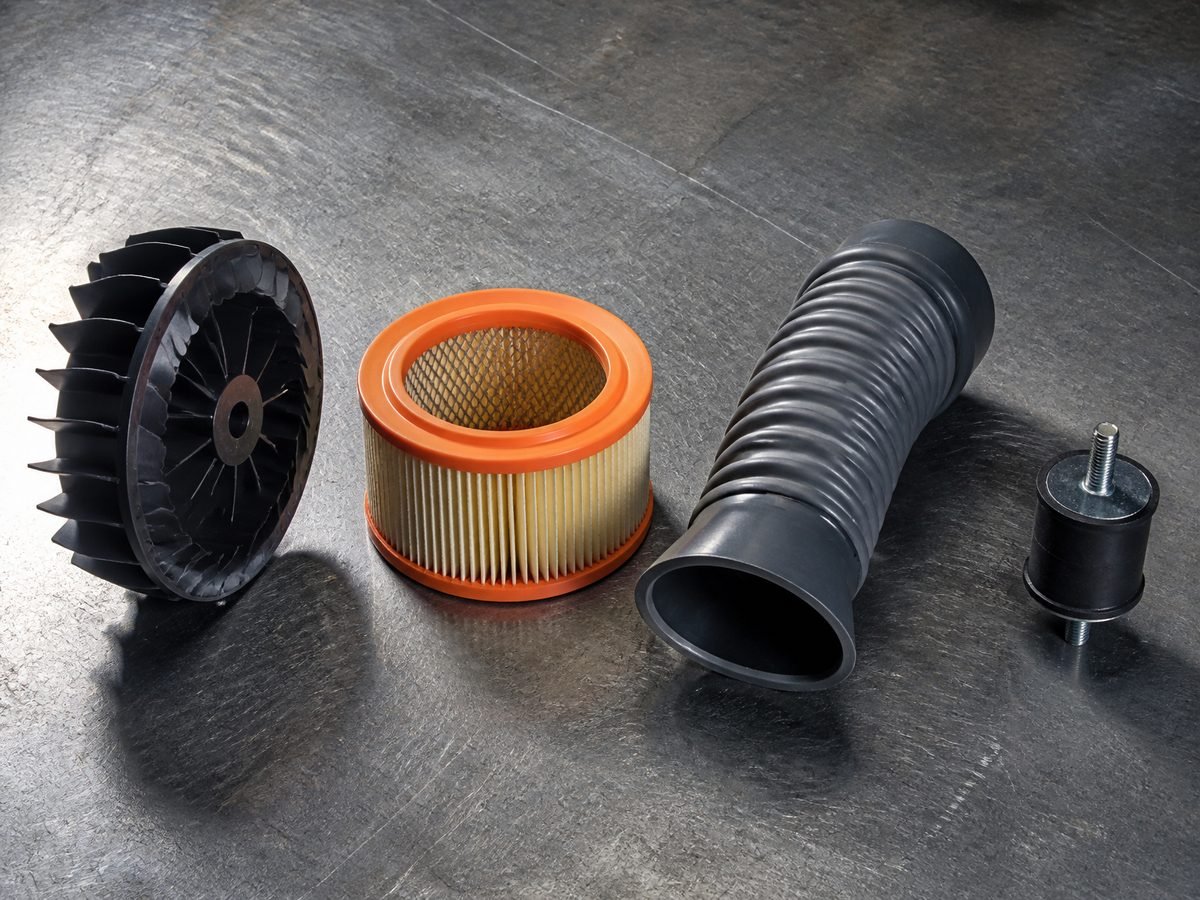
Machine class: petrol blowers only. This guide covers handheld and backpack two-stroke blowers in the Stihl BG and BR class, Husqvarna 125B, 130BT and 350BT class, and similar machines. Chainsaws, brush cutters and trimmers have their own guides — their fuel systems may look similar but their hazards and drive systems are not.
Safety disclaimer. This is general guidance, not a substitute for your machine's own manual. Where a precaution depends on a figure specific to your machine — a mix ratio, a torque value, an ignition gap — the figure belongs to your manual, and we do not publish one that could be wrong for your machine. Work beyond your competence belongs with a qualified technician. Pentales Agro is an independent distributor with no Stihl or Husqvarna agency; brand names describe fitment only.
A blower looks like the least dangerous machine in a groundsman's kit and is often treated as such. It works in dust, it is louder than anything else on the site, and it moves material at speed into places the operator cannot see. The precautions below are the ones that actually prevent damage and injury, starting with the fuel system that fails most often.
Fuel Handling and Two-Stroke Mixing
Blowers are frequently the machine that suffers most from bad fuel, because they are often used intermittently and left with fuel in the tank between jobs.
Store fuel in a proper container, sealed, in a cool ventilated place away from ignition sources. Never in a food or drink bottle, and never somewhere that has ever held food. Keep the container out of direct sun, because pressure build-up in a warm can pushes fuel out of the vent.
Never refuel a hot or running machine. Shut the engine off and let it cool. The muffler sits close to the tank on most handheld blowers, and a spill onto a hot casing is a fire. Refuel outdoors or at an open door, never in a closed vehicle or a closed room.
Get the mix ratio from your machine, not from a general rule. Two-stroke ratios differ between manufacturers and models, and the correct figure is in your manual or on the machine's own label. Use two-stroke oil intended for air-cooled engines, and use straight petrol in a two-stroke and the engine will seize within minutes.
Mix in small batches and use it reasonably fresh. Petrol oxidises and loses its volatile fraction, and stale fuel varnishes the inside of a carburettor. A blower stored with fuel in the carburettor over a wet season is a blower that needs a diaphragm rebuild before it next runs.
Be cautious with ethanol-blended fuel. Blended petrol absorbs moisture from humid air and degrades some fuel lines and diaphragm materials over time. Buy small quantities, keep them sealed, and do not leave blended fuel standing in the machine between jobs. This is the single most common cause of the blower carburettor faults we see.
Do not overfill, and clean up spills before starting. Fuel expands as the machine warms and will find its way out through the vent. Move the machine clear of any spill before you start it.
What You Are Blowing, and Where It Goes
A blower does not make material disappear. It moves it, at speed, into a place you cannot see, and the consequences of that are a real part of using one properly.
Never blow towards people, animals or open windows. Dust and debris leave the tube fast enough to injure an eye, and a blower aimed at a person is an assault whatever the intent. Stop the machine when someone walks into the working area rather than calling a warning over the noise.
Do not blow debris into drains, gullies or watercourses. In a tropical climate this matters more than in a temperate one: drains that are blocked with leaves and cuttings are exactly the drains that flood during a cyclone-season downpour. Where leaf litter and garden waste would end up in the drainage system, collect and bag it instead. This is also the practice that keeps a blower from becoming the reason a road floods.
Do not blow material into the road. Roadside work with a blower throws material into traffic lanes, and both the debris and the operator are then in the carriageway. Move material away from the road, not into it, and where roadside work is unavoidable use the traffic controls the site requires.
Be careful with what is actually in the dust. Dust lifted by a blower can include dried animal faeces, mould from damp leaf litter, road dirt and fine mineral dust. These are not inert, and the precautions in the safety guide apply — dust raised deliberately in a confined space is worse than dust encountered incidentally.
Do not use a blower in an enclosed space. A blower moves a large volume of air, including its own exhaust, and enclosed spaces are covered in the safety guide for good reason.
Consider whether a blower is the right tool. For wet, compacted or heavy material it is not, and forcing a blower to move material it cannot shift is how machines get overworked and how operators get frustrated into unsafe positions.
Casing, Impeller and the Damage Debris Causes
The impeller spins fast inside a thin plastic housing, and how you use the machine decides how long both survive.
Do not use the blower to move stones, gravel, metal or glass. Anything hard that enters the fan will chip, bend or crack the impeller, and a cracked impeller spinning at speed can fail destructively. It will also damage the housing from inside. If material is too heavy for airflow to move, it needs a broom.
Do not push the tube into the ground or into piles of debris. This presses material into the intake and into the fan, and it forces the engine to work against a blockage. Keep the tube clear of the ground and use the airflow rather than the machine's body to move material.
Never run the machine with the casing open, cracked or missing a cover. The housing contains the impeller. An open casing exposes a fast-spinning fan and lets material be thrown from the fan rather than from the tube.
Check the intake grille whenever airflow drops. Pine needles, grass and shredded leaves pack the intake and the engine-cooling shroud, robbing the machine of both air volume and engine cooling. A blower that has lost power in dusty conditions is usually blocked rather than broken.
Do not remove the spark arrestor screen. It reduces the risk of the machine igniting fine dry material. In a country with a dry season and abundant cane trash and leaf litter, that function matters.
Keep the cooling fins clear. Dust caked between the cylinder fins causes overheating, lost power and eventually a scored cylinder. Clear it regularly rather than at the end of the season.
Clean the air filter far more often than you think you need to. These machines run in exactly the dust that clogs a filter. A clogged filter enriches the mixture, fouls plugs and makes starting hard, and the operator usually blames the carburettor.
Backpack Blowers: Harness, Straps and Load
A backpack blower puts a hot engine and several kilograms directly against the operator's back, which introduces its own set of precautions.
Fit the harness before you start the machine, and fit it properly. The frame should sit against your back with the weight on your hips and shoulders, straps snug but not restricting circulation and breathing. A badly fitted pack moves as you work, which pulls the machine off balance and, on a long job, causes back and shoulder strain that outlasts the work.
Check the straps and buckles every time. Frayed webbing, a cracked buckle or a torn mounting point fails without warning, and the machine then drops onto you while running. Inspect particularly the point where the frame attaches to the shoulder straps, which takes the most load.
Watch the heat path. On a backpack machine the engine sits near your back, separated by a frame and a back pad. Keep the back pad and the heat shield in place, and never remove or modify them. If the machine becomes uncomfortably hot against your back, that is a fault or a missing heat shield rather than something to endure.
Check the anti-vibration mounts. Rubber mounts between the frame and the engine protect your back and shoulders. Perished mounts transmit far more vibration and allow the engine to move, which chafes fuel lines.
Be aware of what is behind you. A backpack blower's intake is behind the operator, and the tube is in front. Turning quickly can swing the tube into a person or into a vehicle on the other side, and you cannot see the far end of the tube while wearing the pack. Look before you turn.
Do not carry a running backpack blower in a vehicle. Stop it first. A running engine with a hot muffler in a confined cab is a fire and exhaust risk.
Controls, Tubes and Fitting Mistakes
The control and tube assembly is where a blower is most often damaged by careless handling, and where a misfit is easily mistaken for a fault.
Check the tube is fully seated and the correct way round. A tube that is not seated leaks air and makes the machine feel weak even with a healthy impeller. Check this before you conclude anything about the engine.
Do not force tubes or nozzles to fit. Forcing a tube onto a casing outlet cracks the plastic collar, and a cracked collar is a housing replacement rather than a tube replacement. If a tube does not seat easily, it is the wrong tube or the wrong orientation.
Handle tubes as the fragile parts they are. Rigid tubes crack at the joint, flexible tubes split along the corrugation, and both crack when the machine is dropped or when the tube is used to lever material aside. Store the machine with the tube removed where you can.
Never modify the safety of the controls. The throttle trigger must return under its own spring, and the cruise control or lock function must release when the trigger is pressed. A sticking cruise control leaves a machine running at full speed with the operator holding nothing, and disabling the return spring is a modification that turns a tool into a hazard.
Confirm the stop switch works before every use. In dust, switches become intermittent. A blower that cannot be switched off promptly is a machine that should not be started.
Do not use the blower as a broom, a vacuum or a paint drier. Each of those uses loads the impeller in a way it was not designed for and is a common route to a cracked housing or a blocked cooling path.
Storage and the Dusty-Season Service
Blowers suffer more from storage and dust than from running hours, and the servicing schedule reflects that.
Empty the fuel system before storage. Drain the tank and run the engine until it stops from fuel starvation so that no fuel remains in the carburettor to evaporate into varnish. This single step prevents a large share of the carburettor rebuilds these machines need.
Fog the cylinder for long storage: a little two-stroke oil into the plug hole, then turn the engine over by hand a few times. A machine that corrodes internally during a wet season needs a top-end rebuild.
Clean it thoroughly before putting it away. Dust packed around the cooling fins holds moisture and promotes corrosion, and organic debris left in the casing can block the intake and the impeller. Brush the machine down and clear the intake and cooling path.
Remove the tube for storage where practical, and store it where it will not be stood on or crushed. Oil any exposed steel.
Store it under cover but ventilated, off the floor, and not wrapped in plastic, which traps condensation against the machine in humid air. Do not leave it in a closed vehicle where heat cycles generate continuous condensation.
Service it before the season, not during it. In Mauritius, the dry season and the cyclone season both drive heavy cleanup work, with predictable starting points. A blower serviced in the quiet weeks beforehand is cheaper and more reliable than one that fails during a clearance job, and parts availability is better before demand peaks.
Replace the air filter and check the spark arrestor at every seasonal service. These two items cause more "lost power" complaints than anything else on a blower, and both are cheap.
Pre-Start Checks That Prevent Damage
A minute before each use covers most of this guide.
Walk the machine over. Check the intake grille and cooling path for blockage, the air filter, the fuel level and freshness, the tube seating, the throttle return, the cruise-control release and the stop switch. Look for fuel weeping at any joint and for cracks in the casing or tube.
Check the harness on a backpack machine — webbing, buckles and mounting points — and check the anti-vibration mounts for perishing.
Look at where you are about to work. Identify what is in the material you are about to move, where it will end up, whether any of it is heading for a drain, and who or what is in the discharge direction. Blowing debris into a road, a drain or a neighbour's property is a decision made in the first few seconds of a job.
Parts for Stihl-class and Husqvarna-class petrol blowers — carburettor kits, diaphragms, fuel filters and lines, air filters, impellers, housings, tubes and nozzles, throttle cables, stop switches and anti-vibration mounts — are listed in our blower parts catalogue. Where a precaution on your machine needs a figure, such as a mix ratio or a torque value, take it from your own machine's manual: it is model-specific and we do not publish a number that could be wrong for your machine.
Browse Blower Parts · Ask us about a repair · All 13 guides
Pentales Agro is an independent distributor. We hold no Stihl or Husqvarna agency, and brand names appear only to describe which machines a part fits.