Guide · Brush Cutter Parts
Brush Cutter Health and Safety Guide
2,619 words · published 2026-09-26
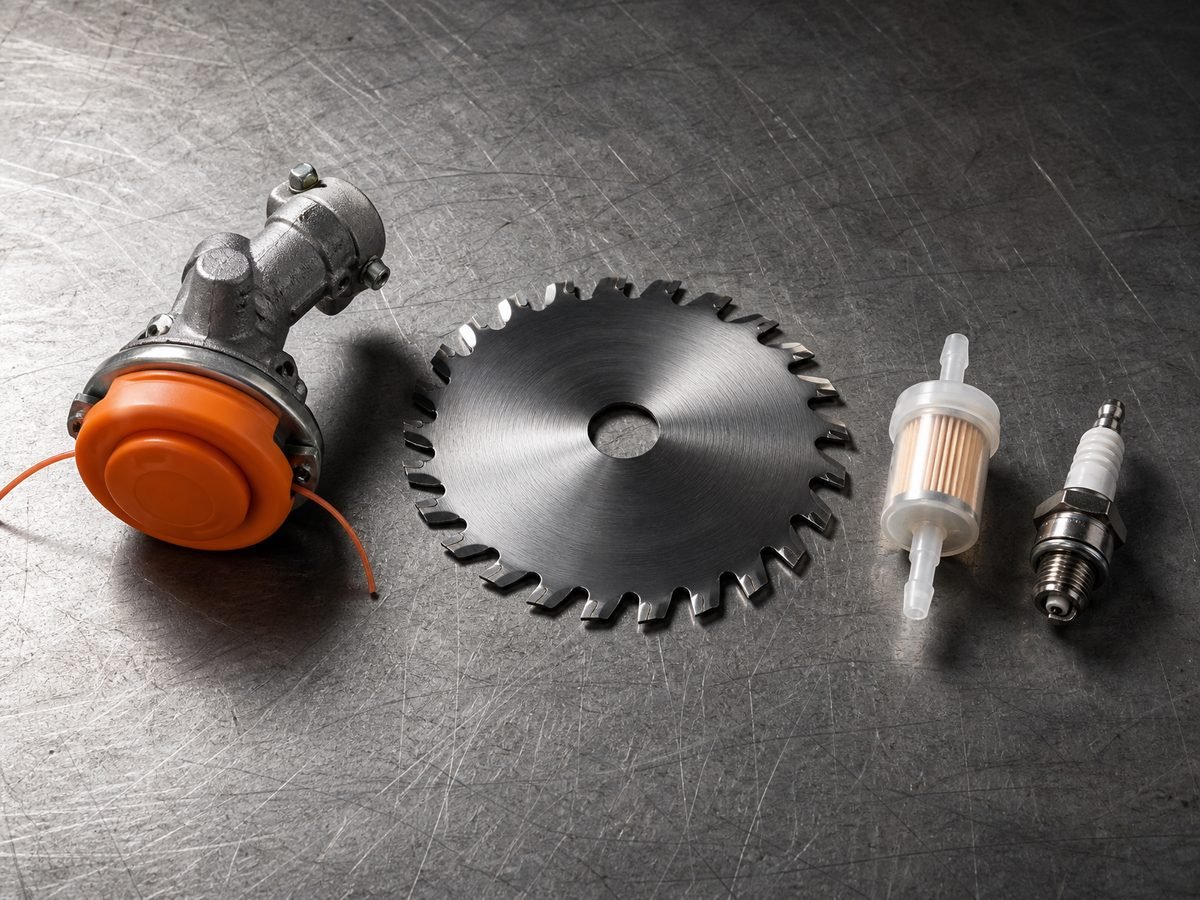
Machine class: petrol brush cutters only. This guide covers heavy-duty straight-shaft brush cutters in the Stihl FS400, FS450 and FS480 class, Husqvarna 300-series class, and similar harness-mounted machines. Curved-shaft trimmers, blowers and chainsaws have different hazards and their own guides. Do not apply this guide to those machines.
Safety disclaimer. This is general guidance, not a substitute for your machine's own manual or for proper training. Brush cutter work with a metal blade is one of the most injury-prone tasks in land management, and no written guide removes that risk. Where a figure would be specific to your machine we have not invented one; health and safety exposure limits are published by national bodies and should be consulted directly. Pentales Agro is an independent distributor with no Stihl or Husqvarna agency.
A brush cutter injures in three ways: the blade reaches the operator's legs or feet, the spinning head throws something at the operator or a bystander, or the operator falls while walking on uneven ground with a running machine. All three are addressed by equipment, setup and technique, in that order.
Personal Protective Equipment
Blade work requires more protection than line work, and the equipment list reflects the higher energy involved.
Head, face and eye protection. A forestry helmet with an integrated mesh visor protects against thrown stones, cut vegetation and low branches. Wear safety glasses behind the visor to stop the fine dust and small particles that pass through mesh. In cane fields and long grass, a visor is not optional.
Hearing protection. A brush cutter runs at a damaging noise level for long sessions. The damage is cumulative and permanent, so wear defenders whenever the engine runs — including during long periods of idling while you clear a jam or reposition.
Leg protection. Brush cutter blade injuries concentrate on the lower legs and feet, and they are the reason brush cutters are considered more dangerous than trimmers. Wear cut-protective legwear rated for brush cutter work, or at minimum heavy, close-fitting trousers and boots — but be clear that ordinary trousers give no real protection against a blade. The temptation to work in shorts in Mauritian heat is strong and is exactly how serious leg injuries happen.
Boots. Cut-protective or heavy work boots with a steel toe, good grip and a covered ankle. Sandals, open shoes and bare feet are incompatible with a machine that discharges material at speed near the ground.
Gloves. Close-fitting gloves improve grip and reduce vibration transmission. Loose cuffs can catch on vegetation or on the machine, so fit matters as much as protection.
A harness is part of your PPE, not an accessory. It carries the machine's weight and it is what lets you keep both hands on the controls. A brush cutter used without a harness is a brush cutter that will eventually be swung by its blade.
Blade Contact and Thrown Objects
These are the two mechanisms that produce the majority of brush cutter injuries, and both are governed by setup and direction of work rather than by reaction speed.
Work away from your body, never towards your feet. The head must always be on the side away from your legs, and the machine must move in a direction you can step back from. Cutting towards your own feet, or pulling the head towards your shins, is the classic mechanism of the brush cutter leg injury.
Keep the guard fitted and correct. The guard is what deflects material away from the operator and what stands between the blade and your legs. Never remove it, never cut it down to fit a larger blade, and replace it when cracked. A machine with no guard should not be used.
Control the discharge direction. The head throws material in the direction of rotation. Do not work with anyone directly in the discharge arc, and keep bystanders — especially children — well outside the working area rather than merely at a safe-looking distance. Thrown stones and cut material travel much further than most operators expect.
Walk the ground first. Wire, fencing, stones, glass and metal offcuts are picked up and thrown with great force, and they also damage or shatter blades. Clear or mark what you can before starting. If you strike something hard, stop and inspect the blade, because impact damage can crack a blade in a way that is invisible from the working side and fails later at speed.
Cut on ground you can stand on. Work across a slope rather than straight up or down it, keep your feet clear of cut material, and do not work backwards. A machine running at working speed while the operator falls is the third common mechanism, and it combines a blade with a person who has lost control of it.
Never use a blade above waist height, and never reach across your body with a running machine. Both positions remove your ability to step away.
Watch for the hidden hazard of springy material. A cut stem under tension can whip back into the operator's face or legs when released. Approach thick or leaning stems deliberately, and keep the visor down.
Safe Starting, Carrying and Shutdown
Starting and moving a brush cutter are when the machine is at its least controlled, and the training most operators never receive is exactly in these three phases.
Start the machine on firm, clear ground with the cutting attachment clear of vegetation and of your body. The accepted method is to place the machine on the ground, hold the shaft and the handlebar to steady it, and pull the starter with the other hand. Do not start a brush cutter while it is resting on your leg or hip, and never start one with the cutting head lifted towards your body.
Never start the machine with the head in long vegetation, and never leave a running machine lying in vegetation. A brush cutter that starts unexpectedly with its head buried in grass will move.
Carry the machine correctly. Stop the engine and let the head come to a complete stop before you walk any distance with the machine, even a few metres. Carry it with the head forward and low, the engine behind you and the muffler away from your leg, and take care that the harness does not swing the head into your shins while you walk. Between work positions, fit the blade guard or transport cover if the machine has one.
Shutdown deliberately. Release the throttle, let the engine return to idle and the head stop, then use the stop switch. Do not stop the machine by choking it or by pushing the cutting head into the ground. After stopping, confirm the head is stationary before you set the machine down or touch the attachment.
Set the machine down safely. Engage the stop, let the head stop fully, and lay the machine down with the head pointing away from you and clear of anything that could be damaged by a hot muffler. Do not set a hot machine down in dry grass or cane trash.
When you clear a jam, stop the engine first. Jams of grass, line and vine around the gear head or the head itself must be cleared with the engine off and the spark plug lead disconnected. Clearing a jam with the engine running, or with the machine merely at idle, is how operators lose fingers.
Vibration, Heat and Fatigue in Tropical Conditions
A brush cutter is used for long continuous sessions in hot, humid conditions while wearing protective clothing, which makes heat and vibration the two exposures that most often go unmanaged.
Hand-arm vibration. Sustained brush cutter use causes vibration-related injury to the hands and arms. Early warning signs are tingling, numbness or whitening of the fingertips after work; at that point the damage is still reversible by reducing exposure. Later stages involve permanent loss of sensation and dexterity. Manage it by keeping the blade sharp, keeping the anti-vibration mounts in good condition, keeping the grip relaxed rather than clamped, taking breaks that allow circulation to recover, and keeping your hands warm. Where brush cutter work is a daily occupation, the published daily exposure limits for vibration should be known and managed deliberately rather than felt out by how your hands seem to be coping.
Noise. The same principle applies: hearing loss from machinery is permanent, and it accumulates. Protection every time, including short jobs.
Heat illness. Wearing a helmet, visor, leg protectors and boots while swinging a machine in Mauritian humidity is genuinely strenuous, and heat exhaustion is a real occupational hazard rather than a discomfort. Drink water regularly rather than only when thirsty, take breaks in shade, and work the heaviest vegetation in the cooler parts of the day where you can choose.
Fatigue. The most dangerous state in which to operate a brush cutter is tired. Grip strength, reaction time and judgement all decline before the operator notices. Stop when your hands are trembling, when you find yourself working with one hand, or when your attention begins to wander. A brush cutter rewards inattention faster than almost any other tool.
Rotate tasks where possible. Long continuous brushing is worse for the hands and arms than alternating between brushing and stacking or clearing. If you are managing a larger job, build the rotation in deliberately.
Working Near Others, and Working Alone
Brush cutters are frequently used in groups — roadside crews, estate teams, contractors' gangs — and by lone operators in fields, and each setting needs a different control.
Keep a clear exclusion zone. Define a working radius and keep everyone else outside it, including people who think they are safe. Thrown material travels much further than the visible discharge. Make the zone visible where you can, and stop the machine when someone enters it rather than shouting a warning over the engine noise.
Never work two brush cutters so their discharge arcs cross. Operators working side by side should be positioned so that neither machine throws material towards the other.
Use high-visibility clothing on roadside work, and never cut roadside vegetation with your back to live traffic. Where the site requires traffic management, it must be in place before cutting begins, not improvised afterwards.
If you work alone, reduce your margin for error deliberately. Carry a charged mobile phone, tell someone where you are working and when you expect to return, work within reach of a vehicle where possible, and carry a first aid kit capable of stopping serious bleeding. A blade injury in a remote cane field or on a hillside is a different emergency from the same injury beside a road, and the difference is entirely the time to treatment.
Never work alone with a blade in a location you cannot be reached by vehicle if an alternative exists. This is a judgement call, and it is one worth making in advance rather than on the day.
Refuelling and Fire Risk in Dry Vegetation
A brush cutter is used in exactly the conditions where fire spreads fastest: dry grass, cane trash and leaf litter, in the dry season, with a hot exhaust.
Refuel on bare ground, away from vegetation. Move the machine off and away from dry material before opening the cap, and clear a small area if no bare ground exists. Do not refuel on dry grass because the ground is convenient.
Shut the engine off and let the machine cool. The muffler remains hot for minutes. Petrol vapour ignites at a temperature well below the surface temperature of a hot muffler, and vapour travels along the ground towards any ignition source.
Do not overfill. Fuel expands as the tank warms, and an overfilled tank discharges through the vent over hot surfaces and into vegetation.
Wipe up spills immediately and let them evaporate before starting. Move the machine clear of a spill, and never start a machine with fuel-soaked vegetation beneath it.
Recognise the fire risk of the cut material itself. Fine dry grass dust around a hot muffler, and dry cane trash, ignite readily. Stop and clear caked material from around the engine and muffler periodically during dry-season work.
Keep an extinguisher or a means of extinguishing a fire within reach on larger jobs, know where it is, and know which type is suitable for fuel fires. A dry-powder or foam extinguisher is appropriate for petrol; water spreads burning fuel. Where no extinguisher is available, a clear plan to move away from the machine and smother small ground fires with soil is better than no plan.
Do not smoke or allow any flame near fuel, and store fuel away from the work site. Keep it out of direct sun and away from the machine, including when the machine is hot.
When Something Goes Wrong: First Aid and Emergency Response
Know the numbers before you need them. In Mauritius, the national emergency numbers published by the Prime Minister's Office are Police 999, Mauritius Fire and Rescue Service 115, and SAMU (ambulance) 114.
For a blade injury to a leg or foot. Apply firm direct pressure with the cleanest material available, keep the pressure on without lifting the dressing to inspect the wound, and elevate the limb if you can. Keep the person still and warm, and call SAMU on 114. Blade injuries to the lower leg can involve deep structures and can bleed heavily; the priority is pressure, calling for help and transport, not cleaning or dressing the wound at the site. If the machine is still running, stop it first — the injured person may be close to the cutting head.
For thrown material in the eye. Do not rub the eye and do not try to remove anything embedded in it. Cover the eye lightly and get medical care urgently. For a splash of fuel or other chemical, irrigate the eye immediately with clean, low-pressure water, continuing for as long as you reasonably can, and then continue to medical help.
For a foot or leg crushed or struck by the machine housing. Immobilise the limb in the position found, do not allow weight-bearing, and get medical help. Do not attempt to remove a boot from a badly swollen foot in the field.
For heat illness. Stop work at the first sign of headache, dizziness, nausea, cramping or confusion. Move the person into shade, loosen clothing, and cool them with water and airflow. Confusion, or hot dry skin with a rising temperature, is a medical emergency: cool actively while getting help. Working in protective clothing in Mauritian humidity makes this a genuine risk rather than a theoretical one.
For fuel on the skin. Remove contaminated clothing immediately, wash the skin with soap and water, and keep the person away from any ignition source. If fuel has been swallowed or inhaled, do not induce vomiting and call 114 for advice — petrol inhaled into the lungs is a serious injury even in small quantities.
Prepare before you cut. Carry a first aid kit with a dressing large enough to control serious bleeding, know the nearest medical facility and route, and make sure someone knows your location and expected return. In remote vegetation the time between injury and treatment is the variable you can control in advance, and it is the one that most affects the outcome.
Replacement guards, harnesses and webbing, anti-vibration mounts, gear head parts, trimmer heads and blades for Stihl-class and Husqvarna-class brush cutters are listed in our brush cutter parts catalogue. Cut-protective legwear, forestry helmets and rated boots are not sold through our parts catalogue; buy them from a supplier who can confirm the standard they meet, because uncertified protective clothing offers no protection against a blade.
Browse Brush Cutter Parts · Ask us about a repair · All 13 guides
Pentales Agro is an independent distributor. We hold no Stihl or Husqvarna agency, and brand names appear only to describe which machines a part fits.