Guide · Brush Cutter Parts
Brush Cutter Precautions Guide: What to Avoid Before Something Breaks
2,572 words · published 2026-09-26
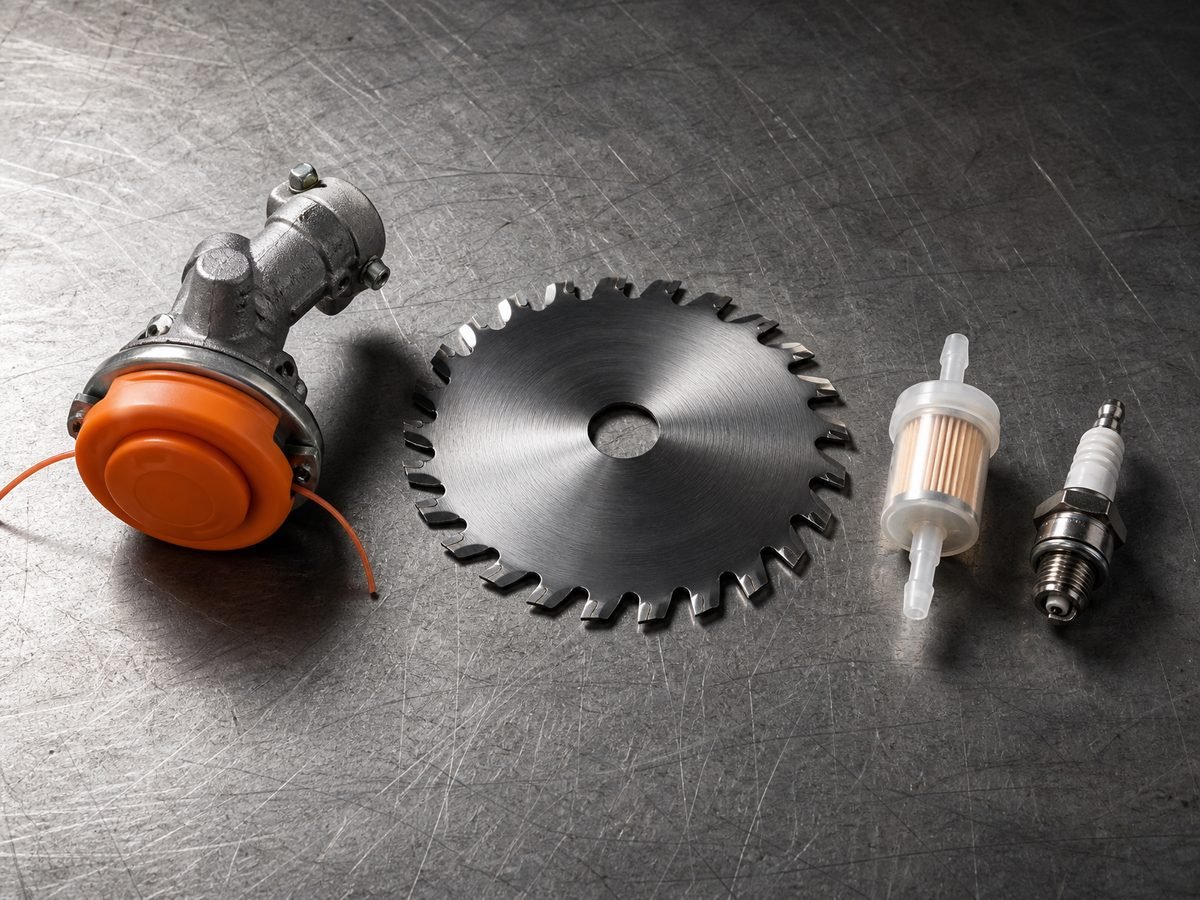
Machine class: petrol brush cutters only. This guide covers heavy-duty straight-shaft brush cutters in the Stihl FS400, FS450 and FS480 class, Husqvarna 300-series class, and similar machines with a rigid drive shaft, a gear head and a harness. Light curved-shaft trimmers are covered in the trimmer guide, and blowers and chainsaws have their own guides entirely.
Safety disclaimer. This is general guidance, not a substitute for your machine's own manual. Where a precaution depends on a figure specific to your machine — a mix ratio, a grease quantity, a torque value — the figure belongs to your manual, and we do not publish one that could be wrong for your machine. Work beyond your competence belongs with a qualified technician. Pentales Agro is an independent distributor with no Stihl or Husqvarna agency; brand names describe fitment only.
A brush cutter is a machine that throws things. It spins a blade or a line head at high speed close to the operator's legs, in dry vegetation, and it is often used by someone walking backwards. Nearly every serious brush cutter injury comes from one of a short list of avoidable setup and technique mistakes, and nearly every destroyed gear head comes from neglect.
Fuel Handling and Two-Stroke Mixing
The fuel rules for a brush cutter are the same as for any two-stroke machine, with one addition: this machine is used in dry vegetation, which makes spills more consequential.
Store fuel properly and away from the work area. Use a purpose-made container, sealed, in a cool ventilated place away from ignition sources and never in a food or drink container. Do not store fuel where dry grass, cane trash or sawdust accumulates.
Never refuel a hot or running machine, and never refuel in dry vegetation. Shut the engine off, move the machine onto bare ground or a hard surface, and let it cool before opening the cap. The muffler and cylinder stay hot for minutes. Cane trash and dry grass ignite readily, and a spill in them is a fire rather than a nuisance.
The mix ratio is specific to your machine. Take it from your manual or the manufacturer's label on the machine, not from a general rule. Two-stroke oil for air-cooled engines is the correct oil; outboard or water-cooled two-stroke oil is not. Straight petrol will seize the engine in minutes and there is no cheap repair from that.
Mix accurately and use it reasonably fresh. Measure the oil rather than pouring by eye, mix in small batches, and do not leave blended fuel standing for months. Fuel left in the bowl of a carburettor over a wet season evaporates into varnish that blocks the metering passages.
Be mindful of ethanol-blended fuel in a humid climate. Blended petrol absorbs moisture from the air and attacks some fuel lines and diaphragm materials over time. Buy small quantities, keep them sealed, and do not leave it sitting in the machine.
Check for fuel leaks before each use. A weeping fuel line, a loose cap or a cracked tank gasket is a fire risk on a machine that runs in dry vegetation, quite apart from being a running fault. Fix any wet patch around the fuel system before the machine goes out.
Blade and Line: Fitting Mistakes That Hurt
The cutting attachment is where a brush cutter does its damage, and it is also where assembly errors are most likely to be made and least likely to be noticed.
Fit a blade only if the machine is designed for one. A blade requires a straight shaft with a rigid drive, the correct guard, a harness, and a machine of sufficient power. Fitting a blade to a light trimmer with a curved shaft is dangerous and will also destroy the drive cable.
Use the complete mounting stack. A blade is fitted with a mounting cup or plate, a thrust washer, and the correct retaining nut, in the right order and the right way round. Omitting the thrust washer or fitting the cup upside down are both common errors that leave the blade loose or off-centre. A blade that comes off at operating speed is lethal, and no amount of subsequent care compensates.
Respect the direction of rotation. Blades with a shaped cutting edge are directional. Fitting one backwards produces a blade that does not cut properly, throws material in the wrong direction and can work the retaining nut loose.
Check the blade's condition before every use. Cracks, deep nicks, missing teeth, a bent blade or an elongated mounting hole all mean the blade is finished. A cracked blade is never repaired, straightened or welded — it is replaced. Rebalance or replace any blade that produces vibration, and check that the mounting hole is round and unworn.
Match the guard to the attachment. Guards are designed for a specific attachment type and size. Never trim, cut down or remove a guard to make a larger blade fit, and never run a machine with the guard missing or cracked. The guard is what stands between the blade and the operator's legs, and between the spinning head and thrown debris.
Keep the line diameter within the head's specification. Line that is too heavy for a head jams the spool and overloads the engine; line that is too light breaks constantly and leaves an unbalanced head. Keep both line lengths even and trim them to a consistent length, because an unbalanced head vibrates badly at operating speed.
Never remove a jammed cutting head with your hands while the machine is hot or could start. Stop the engine and disconnect the plug lead first. Clearing a jam with a gloved hand on a machine that might still fire is how people lose fingers.
Guards, Harness and Machine Setup
A brush cutter is designed to work hanging from a harness, and setting that up correctly is not a comfort detail — it determines whether the operator can control the machine.
Adjust the harness before anything else. The machine should hang so that the cutting head sits at a comfortable working height with your torso upright, and the weight should be carried on your shoulders and hips rather than your arms. A badly adjusted harness forces you to hold the machine up, which produces fatigue and, in turn, the loss of control that precedes most blade injuries.
Check the harness webbing for wear. Frayed or perished webbing fails without warning, and a machine that drops from a harness lands on your feet, often with the head still spinning. Inspect the straps, buckles and the loop where the machine attaches, and replace worn webbing rather than knotting it.
Check the handle clamps. A handle that can rotate under load will move the moment you hit a hidden stump, and on a machine with a blade that is a serious loss of control. Confirm the clamp bolts are properly seated and firm.
Fit the correct guard and confirm it is secure. A guard that rattles or is bolted through a cracked mount will come off. Replace rather than patch.
Verify the anti-vibration mounts. These rubber mounts connect the engine to the shaft and are what protect your hands. Perished, cracked or collapsed mounts transmit far more vibration and also allow the engine to move, which chafes fuel lines and can pull the inlet boot loose. They are inexpensive and worth replacing at any sign of degradation.
Use a blade only with the harness fitted. One-handed use of a brush cutter with a blade, without a harness, is not a technique — it is the situation that produces the worst injuries.
Drive Train Care and the Mistakes That Destroy It
The gear head and drive shaft are the parts most often destroyed by neglect rather than by wear, and the failures are specific.
Do not use the machine as a lever. Pushing the head into heavy brush, ramming a stump, or levering the machine to free a jammed blade loads the shaft in a way it was never designed for. The tube bends and the shaft twists, and neither is repairable. If the head jams, stop the engine and free it by hand.
Check the gear head grease and the seals. A dry gear head howls, then seizes and takes the bevel gears with it. The quantity and type of grease are model-specific, so take both from your manual — and do not overfill, because excess grease is forced out past the seals and lets abrasive dust in. A gear head weeping grease around the shaft is already ingesting grit.
Lubricate the drive shaft as specified, with what is specified. The shaft runs inside the tube, and the wrong lubricant can migrate, clog or fail to protect. If your manual names a lubricant, use that one.
Never run a machine with a missing or reversed thrust washer, or with the head loose. A loose head flogs the arbor and wears the gear head shaft, and the resulting repair is far more expensive than the part you were missing.
Do not "fix" a slipping clutch by increasing the idle speed. A machine whose head turns at idle has a worn clutch or an idle fault. Raising the idle makes the symptom disappear and leaves a machine that can cut the moment it is lifted. Fix the cause.
Keep the cooling path clear. Dry grass and dust pack around the cylinder and between the cooling fins. That causes overheating and lost power, and it is a fire risk in dry vegetation. Clear it at every refuel, not once a season.
Clean the air filter often and replace it when the element degrades. A brush cutter works in dust. A clogged filter enriches the mixture, causes hard starting and fouls plugs, and the operator usually blames the carburettor.
Working in Dry Grass, Cane Trash and Dust
Where a brush cutter is used changes the risk profile, and in Mauritius that means two seasons that require different precautions.
In the dry season, sparks and hot surfaces start fires. Cane trash, dry grass and leaf litter are readily combustible. Do not set a hot machine down in dry material, keep the muffler clear of trash, and refuel on bare ground away from vegetation. A brush cutter is not a fire-safe machine and it is often used exactly where fire spreads fastest.
In the cyclone and rainy season, the ground is the hazard. Wet slopes, wet grass and soft cane-field soil are slippery, and a brush cutter is used while walking. Wear boots with real grip, work across slopes rather than up and down them, and clear the ground around your feet before starting.
Watch for hidden objects. Wire, fence posts, stones, glass and metal offcuts are thrown by a brush cutter with great force and can also shatter a blade. Walk the area first where you can, and stop immediately if you strike something hard — a blade that has hit metal may have a crack that is invisible from the working side.
Cut away from yourself, and never towards your feet. The correct working direction keeps the head on the side away from your body and moves the machine in a direction you can step back from. Cutting towards your own feet or towards the machine's own body is the mistake that produces the classic brush cutter leg injury.
Do not walk backwards. Working backwards is how operators fall, trip and step into what they were cutting. Where the site allows, plan the cut so you move forward through it.
Mind the direction of throw. A brush cutter throws material in the direction the head rotates, which is why the guard and a deliberate working direction matter. Do not work with other people directly behind or beside the head's discharge side, and keep bystanders, children and animals well clear of the working area.
Storage Through the Wet Season
Mauritius stores machinery badly: high humidity, salt air near the coast and a long wet season attack fuel systems, bearings and fasteners while a machine sits idle.
Drain the fuel system before long storage. Empty the tank and run the engine until it stops from fuel starvation, so no fuel remains in the carburettor bowl to evaporate into varnish. This single habit prevents a large share of the carburettor rebuilds we see.
Fog the cylinder if the machine will sit for months. A little two-stroke oil into the plug hole, then turn the engine over by hand a few times, coats the bore against corrosion. A machine that rusts solid in storage needs a top-end rebuild — a far worse outcome than this ten-minute step.
Remove the cutting attachment for storage. Store the blade or head separately, oiled, off the machine. A blade left fitted in a damp shed corrodes at the mount, and a trimmer head left under tension takes a set.
Grease the gear head before storage, not after. Grease already in place is what keeps moisture off the gear faces over a wet season. Do not store a gear head that is due for grease.
Clean the machine before putting it away. Dry grass and dust hold moisture against metal and against the cooling fins, and organic debris left packed around a cylinder can promote corrosion and harbour insects. Brush the machine down properly.
Store it up off a concrete floor and under cover but ventilated, not sealed in a plastic bag. A sealed bag traps condensation against the machine, which is the opposite of what you want in a humid climate. Slacken the drive slightly and oil exposed steel.
Service it before the season, not during it. Cyclone season and cane season both have predictable starting points. A machine serviced in the quiet weeks beforehand is vastly cheaper than one that fails during a clearance job, and parts availability is better before demand peaks.
Pre-Start Checks That Prevent Damage
Two minutes before each use covers most of what this guide warns about.
Walk the machine over. Check the blade or line head for condition and correct fitting, the guard for cracks, the harness for frayed webbing, the handle clamps for firmness, the anti-vibration mounts for perishing, the air filter, and the fuel and oil levels. Look for fuel weeping anywhere.
Test the safety systems cold. With the engine off, confirm the throttle lock-out works and the stop switch functions. Confirm the cutting attachment is firmly mounted and that any blade is the correct one for the guard fitted.
Confirm the cutting head does not turn at idle before you enter long vegetation. A machine whose head turns at idle is unsafe and needs its idle speed or clutch corrected first.
Set up the site before you start. Clear loose objects, position other people clear of the throw direction, and plan your path through the vegetation so you are not working backwards. In dry conditions, identify a clear bare area for refuelling and for setting the machine down.
Parts for Stihl-class and Husqvarna-class brush cutters — gear heads, seals, drive shafts, clutches, trimmer heads, line, blades, guards, harnesses, anti-vibration mounts and carburettor kits — are listed in our brush cutter parts catalogue. Where a precaution on your machine needs a figure, such as a grease quantity, a torque value or a mix ratio, take it from your own machine's manual: it is model-specific and we do not publish a number that could be wrong for your machine.
Browse Brush Cutter Parts · Ask us about a repair · All 13 guides
Pentales Agro is an independent distributor. We hold no Stihl or Husqvarna agency, and brand names appear only to describe which machines a part fits.