Guide · Chainsaw Parts
Chainsaw Health and Safety Guide
2,747 words · published 2026-09-26
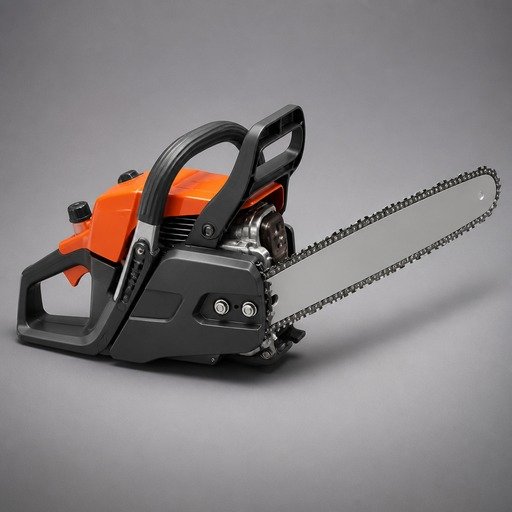
Machine class: petrol chainsaws only. This guide covers Stihl MS-class and Husqvarna 100–300 series class two-stroke chainsaws and similar machines. The hazards of a brush cutter, blower or trimmer are different and are covered in their own guides. Do not apply this guide to those machines.
Safety disclaimer. This is general guidance, not a substitute for your machine's own manual or for proper training. Some numbers here — vibration limits, exposure durations, hearing thresholds — are published by health and safety bodies and are cited where used; where a figure would be specific to your machine, we have not invented one. Chainsaw work is genuinely dangerous and no guide makes it safe on its own. Pentales Agro is an independent distributor with no Stihl or Husqvarna agency.
A chainsaw is one of the few portable tools that can kill in a single mistake, and the two mechanisms that do most of the harm are kickback and a chain that reaches the body. Both are largely preventable, and prevention is concentrated in equipment, technique and fatigue management rather than in courage or experience.
Personal Protective Equipment
Chainsaw protection is one of the few areas of safety equipment where the standards are specific and the equipment is genuinely effective. Wear all of it, every time, including for one cut.
Head protection. A forestry helmet with an integrated mesh visor and ear defenders protects against falling material, thrown debris and saw noise simultaneously. The visor must be rated for impact, not just a sun shield. Replace a helmet after any significant impact, and inspect the harness for brittleness if it has been stored in heat.
Eye and face protection. The mesh visor stops larger chips; safety glasses behind it stop fine dust and the small particles that pass through mesh. Together they cover the gap that either one alone leaves.
Hearing protection. A chainsaw runs at a level that causes permanent hearing damage over repeated exposure, and the damage is cumulative and irreversible. Ear defenders work better than earplugs on a saw because they also block sound arriving through the skull. Wear protection whenever the engine is running — including while you are sharpening or servicing with the saw idling beside you.
Cut-protective trousers and legwear. These are the single most important item of chainsaw PPE, and the one most often skipped in hot climates. They work by feeding a layer of long fibres into the sprocket and jamming the chain in a fraction of a second when a saw touches a leg. Ordinary trousers, including heavy work trousers, offer no protection at all. In Mauritian heat the temptation to work in shorts is strong; a chainsaw will injure a bare leg catastrophically, and cut-protective trousers made for tropical use are available and far more comfortable than the alternative.
Cut-protective boots with a steel toe and a good grip, plus cut-protective gloves. Gloves must be close-fitting; a loose cuff can catch on a branch or on the chain.
Kickback and the Chain Brake
Kickback is the violent upward and backward movement of the saw when the upper part of the bar's nose contacts wood or another solid object. It is the most common cause of serious chainsaw injury, and it happens faster than human reaction time — which is exactly why the chain brake exists.
Understand what causes it. Kickback occurs when the chain's rising teeth at the bar nose bite into material rather than cutting through it. The usual triggers are: cutting with the nose of the bar, boring or plunging without control, cutting with a dull or badly sharpened chain, hitting a knot or a nail, and cutting material that pinches the bar. A saw with a loose chain, a worn sprocket or a chain whose depth gauges have been filed too far down kicks back more readily.
The chain brake is your primary protection, and it must be tested. It is a spring-loaded band that stops the chain when it trips — either from the inertia of a kickback or from the back of your left hand pushing the front guard forward. Test it before each work session: with the engine idling, push the front guard forward with the back of your hand and confirm the chain stops immediately, then release the guard and confirm the chain turns again. A chain brake that does not trip is a fault that takes the saw out of service until it is fixed.
Grip and stance reduce the risk. Hold the saw with both hands, the left hand on the front handle with the thumb wrapped underneath, not laid along the top. Grip with the thumb wrapped is what prevents the saw being pulled out of your hand during a kickback. Keep your left arm straight and your body to the left of the saw's centre line, so if a kickback does occur the saw travels up and past your shoulder rather than into your face.
Technique matters more than gear. Keep the bar nose out of the wood, keep the chain sharp, keep the chain tension correct, and never cut above shoulder height with a rear-handled saw. Cutting overhead with a rear-handled chainsaw is a technique that cannot be made safe; use a pole pruner for high work.
Never one-hand a chainsaw. However comfortable it feels, and however short the cut, one-handed use removes the grip that stops a kickback pulling the saw free.
Safe Starting and Shutdown
Starting a chainsaw is when the operator is closest to the chain and least able to control the machine, and it is a phase where serious injuries occur regularly.
Start on the ground, or in a controlled position. The safest method is to set the saw on bare ground with the bar and chain clear of obstructions, place your right foot through the rear handle to hold the machine, grip the front handle with your left hand, and pull the starter with your right. Do not start a saw while it is standing on end on your leg, and do not start one while holding it in the air.
Never drop-start a chainsaw. Drop-starting — holding the throttle with one hand and dropping the saw while pulling the cord — is a technique that leaves the chain unguarded and the machine uncontrolled the moment it fires. Its popularity in some settings does not make it safe.
Be deliberate about the chain brake at start-up. Many operators start with the chain brake engaged so the chain cannot move if the throttle is caught as the engine fires. Confirm the brake is on before you pull the starter, and release it only with the saw under control and the bar clear.
Check the idle before you use the saw. A correctly set up saw has a stationary chain at idle. If the chain turns at idle, the saw is unsafe until it is corrected, because the chain can engage the moment the machine is lifted or the throttle is nudged. Idle speed and clutch condition are the usual causes.
Shutdown is the reverse, and equally deliberate. Release the throttle, let the engine return to idle, then use the master control switch. Do not stop the engine by engaging the chain brake — that abuses the brake and can leave it in a state where it will not re-engage correctly. Before setting the saw down, let it idle briefly so the chain stops moving under its own momentum.
Set the saw down properly and engage the brake whenever you put it down, even for a moment. A saw left running on the ground with the brake off is a saw that can move.
Hearing, Vibration and Hand-Arm Exposure
These are the hazards that do not hurt immediately, which is exactly why they are neglected. Both cause permanent damage that appears after years of exposure.
Noise. Sustained chainsaw exposure damages the hair cells of the inner ear, and the loss is permanent. The practical rule is simple: hearing protection every time the engine runs, with no exceptions for short jobs. If you cannot hear clearly after using the saw, the protection was inadequate or absent. Tinnitus after a work session is a warning sign, not a normal consequence of the job.
Vibration. Prolonged use of a two-stroke machine causes hand-arm vibration syndrome, known in its later stages as vibration white finger. The early signs are tingling, numbness or a whitening of the fingertips after work, returning to normal within an hour; at that stage the exposure is still reversible by reducing it. The later stages produce permanent loss of sensation and dexterity that interferes with everyday life, including the ability to feel small objects.
Manage exposure rather than push through it. Keep the chain sharp, because a dull chain forces the operator to hold the saw tighter and increases transmitted vibration. Keep the anti-vibration mounts in good condition — perished or collapsed rubber mounts transmit far more vibration and are a cheap part to replace. Warm hands, keep the grip relaxed, and take breaks that allow circulation to recover. Health and safety bodies publish action and limit values for daily vibration exposure and for noise; if saw work is your daily occupation, the correct approach is to know those limits and to measure or estimate your exposure rather than to rely on how you feel.
Report symptoms early. Tingling or numbness in the fingers is the point at which a change of habits still helps. Do not wait for it to become permanent.
Working Position, Footing and Fatigue
Most chainsaw accidents happen when the operator is tired, off balance, or working in a position they cannot leave quickly. Managing those three conditions prevents more injuries than any tool.
Plan an escape route before every cut. Decide, before the chain touches wood, where you will step if the saw kicks or the material moves. Clear that path. A limb that rolls onto your foot or a log that shifts under a saw is far more likely to hurt you than the chain itself.
Never cut above shoulder height with a rear-handled saw. Balance, control and the ability to move away all degrade as the saw rises. Use a pole pruner or leave the cut to a trained climber.
Watch for what the material will do, not just what the saw will do. Compression wood will pinch the bar, and a limb under tension will spring when released. Two cuts — a relieving cut on the compression side and then the final cut — are safer than fighting a pinching bar, and a pinched bar should be released by cutting from the other side, never by pulling the saw free with the engine running.
Keep your footing clean and deliberate. Chainsaw work happens on slopes, in wet grass, on cane trash, and in the leaf litter of a cyclone season, all of which are slippery. Clear around your feet, work on ground you can stand on, and avoid reaching across your body.
Stop before you are tired. Fatigue is the most underrated chainsaw hazard. Reaction time, grip strength and judgement all fall away before the operator notices, and the last cut of a long day is statistically a bad place to be. Take breaks, hydrate — this matters in Mauritian humidity — and stop when your hands are trembling or your attention is drifting.
Work with someone within reach if you are felling or handling large material, and carry a means of communication. Working alone with a chainsaw far from help is a decision that removes your margin for error.
Refuelling, Fire and Hot Surfaces
Refuelling and hot surfaces cause the burns and fires associated with chainsaws, and both are entirely preventable.
Refuel away from the work area and on bare ground. Clear the area of dry grass, cane trash and leaf litter, which ignite readily in the dry season. Do not refuel on a trailer bed, in a vehicle or anywhere near other running machinery.
Shut the engine off and let the saw cool before opening the fuel cap. The muffler and cylinder remain hot for several minutes after use. Petrol vapour rather than liquid petrol is what ignites, and a hot muffler is well above its ignition point.
Open the cap slowly to release pressure, and never overfill. Fuel expands as it warms; a tank filled to the brim will discharge through the vent once the saw heats, spreading fuel over hot surfaces.
Clean up spills immediately and do not restart the saw until the fuel has evaporated or been wiped away. Move the saw away from the spill before starting it.
Know the fire risk of your own machine. A leaking fuel line, a loose fuel cap, a cracked tank housing or fuel weeping around the carburettor are fire risks as well as running faults, and each of them is cheap to fix. Inspect for wet patches around the fuel system regularly, and fit any suspect line or cap rather than working around it.
Keep a suitable extinguisher within reach and know how to use it. For fuel fires, a dry-powder or foam extinguisher is appropriate; water spreads burning petrol. Store fuel separately from the machine, and never smoke or allow any flame near either.
Be aware that dust and dry debris ignite easily. Sawdust, cane trash and dry leaf litter are all readily combustible, and a hot muffler set down in long dry grass is a recognised cause of grass fires.
When Something Goes Wrong: First Aid and Emergency Response
Know the numbers before you need them. In Mauritius, the national emergency numbers published by the Prime Minister's Office are Police 999, Mauritius Fire and Rescue Service 115, and SAMU (ambulance) 114.
For a severe bleed. Apply firm direct pressure to the wound with the cleanest material available, using the flat of your hand or the heel of your palm, and keep the pressure on. Do not repeatedly lift the dressing to inspect the wound. Elevate the limb if you can, keep the person still and warm, and call SAMU on 114 immediately. A chainsaw laceration can involve deep structures and bleeding that will not stop without surgical help, so the priority is pressure, calling, and transport — not cleaning or dressing the wound in the field.
For a suspected fracture or a crushed foot. Immobilise the limb in the position found rather than trying to straighten it, do not allow weight-bearing, and get medical help. Do not attempt to remove a boot from a badly swollen foot in the field; that is a job for the treating clinician.
For eye or face injury. Do not rub the eye or try to remove an object embedded in it. Cover the eye lightly and get to medical care urgently. For chemical or fuel splash in the eye, irrigate immediately with clean, low-pressure water for as long as you can and then continue to medical help.
For heat exhaustion or heat stroke. Mauritian humidity makes heat illness a real risk for anyone wearing protective clothing while working hard. Stop work at the first sign of headache, dizziness, nausea, muscle cramps or confusion; move the person into shade, loosen clothing, and cool them with water and airflow. Confusion or a hot, dry or flushed skin with a rising temperature is a medical emergency — cool them actively while getting help.
For fuel on skin or clothing. Remove contaminated clothing immediately, wash the skin with soap and water, and keep the person away from any ignition source. If fuel has been swallowed or inhaled, do not induce vomiting and call 114 for advice — petrol inhaled into the lungs is a serious injury even in small amounts.
Prepare before you work. Carry a first aid kit with a large dressing capable of absorbing serious bleeding, know the nearest medical facility and the route to it, and make sure someone knows where you are working and when to expect you back. In a remote cane field or on a hillside, the time between an injury and treatment is the variable you can control in advance.
Replacement anti-vibration mounts, chain brakes and brake bands, sprocket covers, fuel lines, caps and filters for Stihl-class and Husqvarna-class chainsaws are listed in our chainsaw parts catalogue. Protective clothing is not sold through our parts catalogue; buy cut-protective legwear, boots and helmets from a supplier who can confirm the standard they meet, because uncertified "protective" clothing offers no protection at all.
Browse Chainsaw Parts · Ask us about a repair · All 13 guides
Pentales Agro is an independent distributor. We hold no Stihl or Husqvarna agency, and brand names appear only to describe which machines a part fits.