Guide · Trimmer Parts
Trimmer Health and Safety Guide
2,332 words · published 2026-09-26
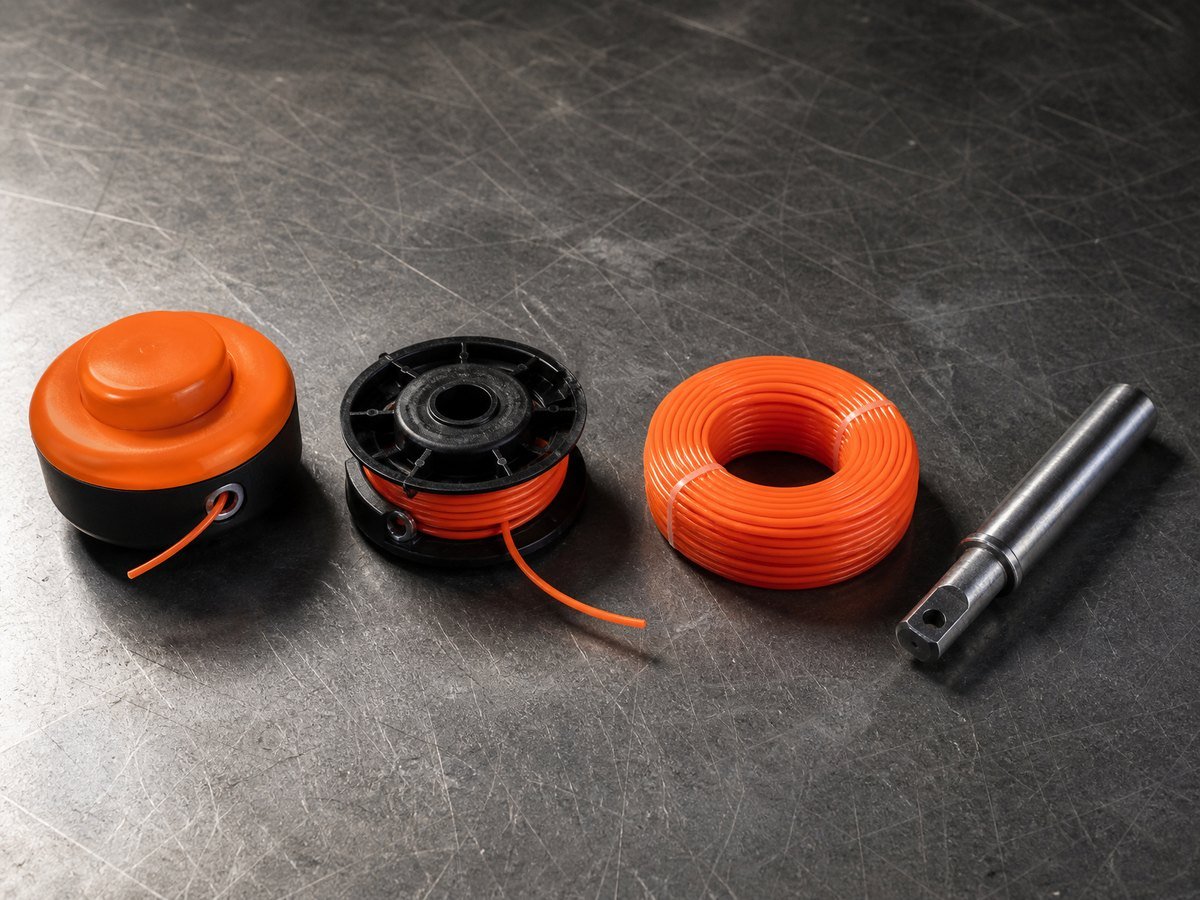
Machine class: petrol string trimmers only. This guide covers light and mid-weight petrol trimmers — curved-shaft machines with a flexible cable or a light straight shaft — including the Stihl FS38, FS55 and FS70 class, Husqvarna 128 and 129 class, and similar. Heavy brush cutters with a rigid shaft, gear head and harness are a different machine and have their own guide. Blowers and chainsaws likewise have their own guides.
Safety disclaimer. This is general guidance, not a substitute for your machine's own manual or for proper training. Where a figure would be specific to your machine we have not invented one; exposure limits for noise and vibration are published by national bodies and should be consulted directly. Pentales Agro is an independent distributor with no Stihl or Husqvarna agency.
A trimmer is the machine people are most relaxed about, and it causes a disproportionate number of eye injuries. The reason is simple: it spins a nylon line at high speed close to the ground, in gravel and dry grass, and it throws small hard fragments at the operator's face from below — a direction from which nobody instinctively protects themselves.
Personal Protective Equipment
Trimmer protection is light and comfortable, which removes any excuse for not wearing it. Eye protection is the one item that should never be omitted.
Eye and face protection first. Small stones, gravel, glass and dried plant material are picked up by the spinning line and thrown upward at the operator's face and eyes. Safety glasses with side protection are the minimum; a face shield worn over them is better where the ground is stony or gravelly, because it also blocks the larger fragments. This is the single most important item on a trimmer, and the injuries it prevents are the kind that cause permanent vision loss.
Hearing protection. A petrol trimmer runs at a damaging noise level and is used for long, continuous sessions. Wear defenders whenever the engine runs. Hearing loss from machinery is permanent, painless and cumulative, and a trimmer is typically run for hours rather than minutes.
Legs and feet. The line cuts at ankle and shin height, and line cuts are painful, dirty and slow to heal — the line carries soil and plant material into the wound. Wear long trousers, substantial closed boots and, for heavy or prolonged work, cut-protective legwear designed for line trimmers. Working in shorts and sandals, which is common in hot weather, puts bare skin directly in the cutting plane.
Gloves. Close-fitting gloves for grip, for vibration and for handling the head and line. Loose cuffs can catch on vegetation.
Respiratory protection where there is dust. Trimming dry grass, dry soil and dusty verges raises fine dust that includes plant material, mould spores and mineral particles. A particulate mask is sensible for prolonged dry-season work, particularly around verges and road edges.
High-visibility clothing for roadside and municipal work, and always where the work is anywhere near vehicles.
Line, Thrown Debris and the Guard
The cutting mechanism is a flexible line rather than a blade, which changes both the risk and the reach in ways that operators consistently underestimate.
The line reaches further than you think. A trimmer line extended at operating speed occupies a disc considerably larger than the visible head, and the tip of that disc travels fast enough to cut skin. This is why a bystander who looks safely clear of the machine can still be struck, and why the exclusion zone around a trimmer needs to be generous rather than minimal.
Keep the guard fitted and its blade intact. The guard is what stands between the line and the operator's legs, and its blade sets the line to the correct length. A missing guard means a longer line, a bigger cutting disc, greater throw and a greater risk of line being thrown. Never remove the guard for convenience, and replace it if it is cracked.
Control the throw direction. The line throws material in its direction of rotation. Know which way your machine rotates, keep your body out of the discharge arc, and keep everyone else well outside it. Never aim the head at a person, a vehicle, a window or an animal.
Walk the ground before cutting. Wire, netting, stones, glass and metal are thrown with force by a trimmer line, and wire wraps the head and stalls it. Clearing what you can find first is faster and safer than clearing a jam afterwards.
Be careful cutting towards rigid surfaces. Kerbs, walls, fence posts and tree trunks cause line to fragment and rebound. Reduce engine speed near hard surfaces and approach at an angle, and accept that close work near concrete is slower.
Do not cut with the head raised above waist height. Material is thrown downward onto the operator's face, and control degrades rapidly as the head rises. Use a pole tool for high work rather than lifting a trimmer.
Never let a second person hold the material you are trimming. Holding a stem or a branch while someone trims it puts a hand in the cutting plane. This is a common practice and it leads to severe hand injuries.
Stop the machine when someone enters the area. Calling a warning over the noise of a trimmer is unreliable, and the line's reach means a person who believes they are clear may not be.
Safe Starting, Carrying and Shutdown
Trimmers are started, carried and set down far more casually than heavier machines, which is exactly why these phases deserve attention.
Start on firm, clear ground with the cutting head clear of vegetation and of your body, and the head pointed away from anyone else. Keep your feet stable and do not start the machine while holding it above the ground or resting it against your leg.
Never start a trimmer with the head in long grass or against a fence. The head will engage immediately and the line will cut or throw whatever is there, including fragments of a fence.
Keep your body out of the cutting plane while starting. Some operators start a trimmer with the head close to their feet. A head that engages on start-up will cut whatever is in front of it, and feet are frequently in front of it.
Carry the machine properly. Stop the engine before carrying it any distance, let the head come to rest, and carry it with the head forward and low and the hot muffler away from your leg. Do not carry a running trimmer with the head near your shins, which is where the machine naturally hangs on many designs.
Shutdown deliberately. Release the throttle, let the engine return to idle and the head stop, then use the stop switch. Confirm the head has stopped before you set the machine down or reach for the cutting head. Never clear a jam or wrap line with the engine running.
Set the machine down where the head cannot be stepped on. A trimmer laid on the ground with the head exposed is a trip-and-cut hazard, especially for the next person who walks through the area. Lay it with the head pointing away from the working path, and let the exhaust cool clear of dry vegetation.
Vibration, Noise and Fatigue
Trimmer work is continuous and repetitive, which makes cumulative exposures the ones that matter most for operator health.
Hand-arm vibration. Long sessions using a trimmer transmit vibration into the hands and arms. Early signs are tingling, numbness or whitening of the fingertips after work, which is still reversible by reducing exposure. Later stages involve permanent loss of sensation and dexterity. Keep the anti-vibration mounts in good condition, keep the grip relaxed, keep the line correct so the machine is not asked to work harder than it should, and take breaks that let circulation recover. Where trimming is daily work, the published daily exposure limits for vibration should be managed deliberately.
Noise. Hearing protection every time the engine runs. Trimmer work is often many hours of continuous noise, and the damage is permanent.
Fatigue and repetitive strain. Trimmer work involves holding a machine at an awkward angle for long periods, twisting the torso and working with limited visibility close to the ground. The resulting strain concentrates in the lower back, shoulders and wrists. Vary the working position, keep the handle adjusted so the machine hangs at a comfortable angle, take breaks, and share out long jobs between operators rather than running one person through it.
Heat illness. Trimming in Mauritian humidity while wearing defenders, boots and long trousers is genuinely exerting. Drink water through the session rather than at the end, take breaks in shade, and work the heaviest areas in the cooler parts of the day where the job allows.
Stop when your hands are shaking or your concentration drops. The most dangerous trimmer operator is the tired one, because a trimmer lets you work with one hand, with poor posture, close to your own feet — all of which are bad decisions that fatigue makes feel normal.
Working Near Others, and Cutting Near Hazards
Trimming happens at the boundary between private ground and public space, which is why the environment around the machine matters as much as the machine.
Define an exclusion zone and keep it. The line's reach plus the throw of material means a trimmer's safe working radius is larger than it appears. Keep children, animals and bystanders well outside it, and stop the machine if anyone enters it.
Never trim while someone is holding the vegetation, and never let anyone reach into the cutting plane to clear a jam or free a wrapped line. Stop the machine first, every time.
Watch for traffic on roadside work. Trimming verges puts the operator close to moving vehicles with limited ability to step away, and material is thrown into the carriageway. Where traffic management is required by the site, it must be in place before cutting starts.
Identify services and structures before you cut. Meter boxes, outdoor taps, low-mounted junction boxes, cables and irrigation lines can all be damaged by trimmer line, and electrical fittings present a shock risk. Work around these by hand.
Be careful near water, mud and slopes. A trimmer is used while walking on wet grass, algae and mud, often with the operator's attention on the ground ahead rather than their footing. Wear grippy boots, work across slopes rather than down them, and avoid walking backwards.
Watch what you damage beyond the cutting line. Trimmer line strips bark from trees and shrubs, and repeated trimming around a trunk girdles and kills the plant. This is the most common injury trimmers cause to landscaping, and it is entirely avoidable by keeping the line clear of stems.
Avoid cutting dry vegetation in windy, dry conditions where sparks or hot exhaust could start a fire. Set the machine down with the muffler clear of dry grass and leaf litter, and refuel away from vegetation.
Refuelling, Fire and First Aid
A trimmer's tank is small, which means frequent refuelling, which means frequent opportunities for a spill near a hot engine.
Refuel away from dry vegetation and on bare ground. Shut the engine off and let it cool before opening the cap, and never refuel with the machine still hot from work. Cane trash, dry grass and leaf litter ignite readily.
Do not overfill and wipe up spills before starting. Move the machine clear of any spill. Petrol vapour, not liquid petrol, is what ignites, and vapour travels along the ground.
Store fuel away from the work area, in a sealed container, out of the sun, and never in the same place you park a hot machine.
In Mauritius, the national emergency numbers published by the Prime Minister's Office are Police 999, Mauritius Fire and Rescue Service 115, and SAMU (ambulance) 114. Keep them accessible on site.
For an eye injury from thrown debris. Do not rub the eye and do not try to remove anything embedded in it. Irrigate with clean, low-pressure water, cover the eye lightly, and get medical attention urgently. A corneal abrasion from a stone or from plant material is a common trimmer injury and it needs proper treatment — blurred vision or persistent pain after a trimmer strike should always be assessed.
For a line cut to the ankle, shin or hand. Apply firm direct pressure with the cleanest material available and keep the pressure on. Line cuts carry soil and plant material into the wound, so they need proper cleaning and, depending on depth, medical assessment and possibly a tetanus review. Seek medical help for any cut that is deep, that will not stop bleeding, or that involves the hand.
For a burn from the engine or muffler. Cool with clean, low-pressure water for as long as comfort allows, do not apply oils or creams, cover loosely, and seek medical attention for anything beyond a small superficial burn.
For heat illness. Stop at the first sign of headache, dizziness, nausea, cramp or confusion. Move the person into shade, loosen clothing and cool them. Confusion or hot dry skin with a rising temperature is an emergency — cool actively while getting help.
Prepare before you work. Carry a first aid kit with a sterile eye wash and dressings capable of controlling bleeding, know the nearest medical facility and the route, and make sure someone knows where you are working. In a large garden or a roadside strip, the time from injury to treatment is the variable you control in advance.
Replacement guards and guard blades, trimmer heads, spools, springs and covers, line, drive cables and shafts, clutch parts, stop switches and anti-vibration mounts for Stihl-class and Husqvarna-class petrol trimmers are listed in our trimmer parts catalogue. Safety glasses, face shields, hearing defenders and cut-protective legwear are not sold through our parts catalogue; buy them from a supplier who can confirm the standard they meet, because unrated protective equipment may give far less protection than its appearance suggests.
Browse Trimmer Parts · Ask us about a repair · All 13 guides
Pentales Agro is an independent distributor. We hold no Stihl or Husqvarna agency, and brand names appear only to describe which machines a part fits.