Guide · Trimmer Parts
Trimmer Precautions Guide: What to Avoid Before Something Breaks
2,425 words · published 2026-09-26
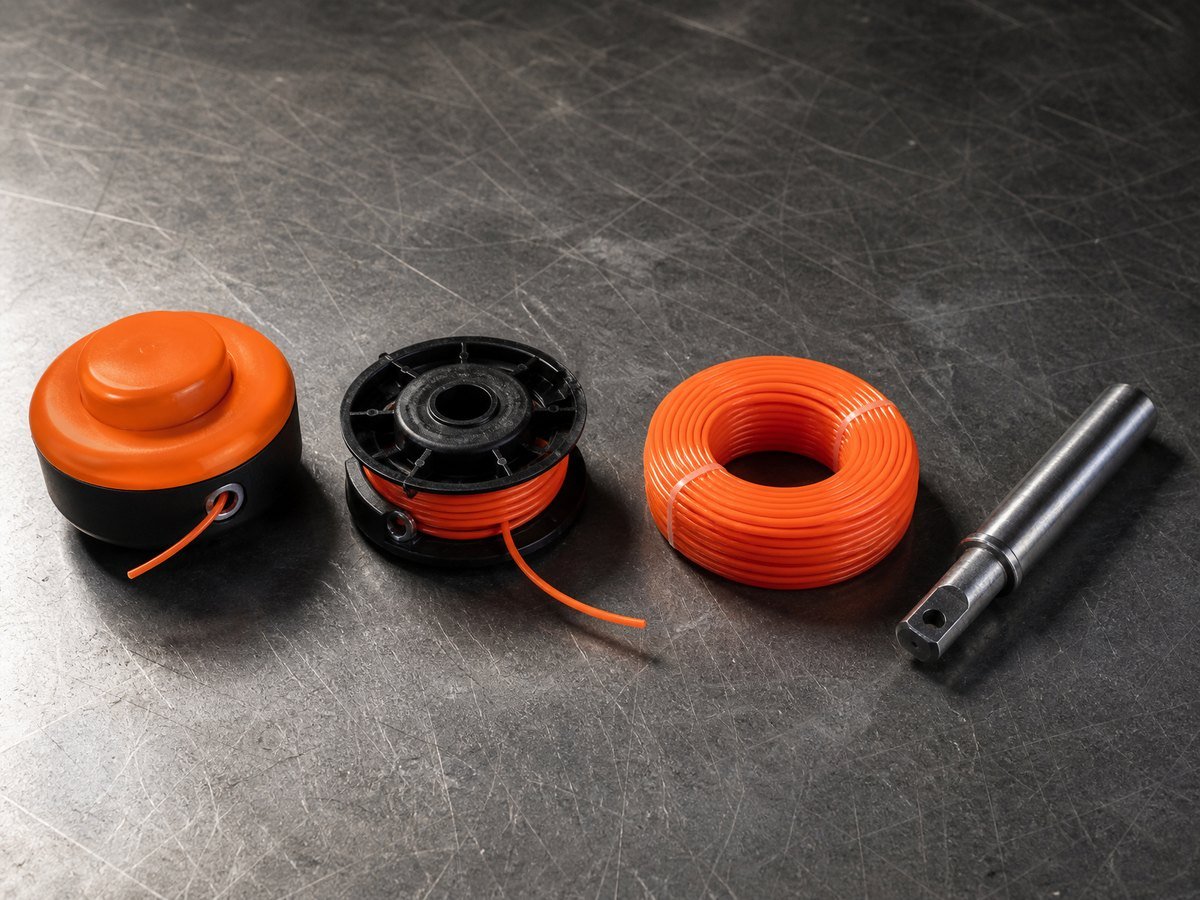
Machine class: petrol string trimmers only. This guide covers light and mid-weight petrol trimmers — curved-shaft machines with a flexible cable or a light straight shaft — including the Stihl FS38, FS55 and FS70 class, Husqvarna 128 and 129 class, and similar. Heavy brush cutters with a rigid shaft and a harness are a different machine with different hazards; use the brush cutter guide for those. Blowers and chainsaws each have their own guide.
Safety disclaimer. This is general guidance, not a substitute for your machine's own manual. Where a precaution depends on a figure specific to your machine — a mix ratio, a line diameter, a torque value — take the figure from your own manual and the marking on your own head. We do not publish a figure that could be wrong for your machine. Work beyond your competence belongs with a qualified technician. Pentales Agro is an independent distributor with no Stihl or Husqvarna agency; brand names describe fitment only.
A trimmer is the machine that most often gets used casually and in the wrong clothing, and it is also the machine whose consumable — the line — is most often fitted incorrectly. Both of those lead to the same outcome: a machine that cuts badly, gets pushed harder than it should, and eventually fails somewhere expensive.
Fuel Handling and Two-Stroke Mixing
The fuel rules for a trimmer are the same as for any air-cooled two-stroke, and the storage habits matter more than usual because trimmers sit unused for long periods.
Store fuel properly. A purpose-made sealed container, in a cool ventilated place away from ignition sources, never in a food or drink bottle, never in a living space or a vehicle cabin. Keep it out of direct sun.
Never refuel a hot or running machine. Shut the engine off and let it cool before opening the cap. On a small trimmer the tank sits close to the engine, and the filler is close to the exhaust on some designs. Refuel outdoors or at an open door, and never in a closed shed.
The mix ratio is specific to your machine. Take it from your manual or the manufacturer's machine label. Use two-stroke oil intended for air-cooled engines; outboard or water-cooled two-stroke oil is formulated for a cooler engine and is not a substitute. Straight petrol will seize the engine within minutes, and there is no cheap repair from that.
Mix accurately and keep it fresh. Measure the oil rather than pouring by eye, mix small batches, and do not keep blended fuel for months. A trimmer stored with fuel in the carburettor over a wet season is a trimmer that will need a diaphragm kit before it next starts.
Be careful with ethanol-blended fuel. Blended petrol absorbs moisture from humid air and attacks some fuel lines and diaphragm materials over time. Buy small quantities, keep them sealed, and do not leave blended fuel standing in the machine between jobs.
Do not overfill and do not leave the cap loose. Both produce fuel escaping onto a hot engine or into the vegetation you are standing in. Wipe up any spill and move the machine clear before starting.
Line, Spool and Head Mistakes
This is the section that prevents most trimmer downtime, because most trimmer faults are line and head faults wearing the clothes of an engine fault.
Use the correct line diameter for your head. A line too heavy binds in the spool and will not feed, which forces the operator to over-rev the engine and push the head into the grass. A line too light breaks constantly and leaves the head unbalanced. The correct diameter is marked on the head or specified in the manual.
Wind the spool in the correct direction, following the arrow or the marking. A wrongly wound spool will not feed at all, and it is one of the most common reasons a trimmer is put aside as "broken".
Keep both line lengths equal. Uneven halves make the head vibrate at operating speed, which wears the head, the cable and the bearings, and it also produces an uneven cut. Trim both ends square and to the same length.
Do not leave line wound tightly on a spool in storage. Line in a spool left in the heat fuses into a solid coil and will not release. Store spare line loose, coiled generously and out of the sun, and rewind a spool when you need it rather than keeping several loaded.
Replace a tired spool spring and a worn cover as a pair. The spring is what makes feed work, and a worn cover lets the spool sit too deep. These are inexpensive parts and they are the reason a head that "will not feed" so often comes back to life with a handful of small components.
Do not try to make a head feed by pulling line out while it runs. Pulling line manually from a spinning head is a fast route to a hand injury, and it also defeats the mechanism that meters the line. Stop the machine and fit it properly.
Keep the guard, including its line-cutting blade. Many guards incorporate a blade that trims the line to length as it spins. If the blade is missing, the line runs too long, overloads the engine, hits objects harder and cuts unevenly. Never remove the guard to make the line feed "better" — if the line needs to be longer, the head has a fault.
Cutting Technique and the Mistakes That Damage Machines
Trimmers fail mechanically because of how they are used far more often than because of manufacturing. These are the habits that cost money.
Do not force the head into vegetation. A trimmer cuts with the tip of a fast-moving line, not with pressure. Pushing the head into long grass or against a fence loads the engine and the drive and is the fastest way to burn out a clutch and stretch a cable. If the machine will not cut it, either the line is wrong, the grass is too long for one pass, or the job needs a brush cutter.
Cut in the correct direction and at the correct height. The head should rotate so that material is thrown away from the operator, and the cutting plane should be controlled rather than used as a scythe. Sweeping the head from side to side through heavy growth, or dragging it along the ground, both overload the machine and wear the head.
Avoid cutting wet grass and wet vegetation. Wet material clogs the guard, packs around the head and the cooling fins, and greatly increases the load. Where you must work wet, clear the head and cooling path frequently.
Do not use the trimmer to move material. Using a spinning head to sweep gravel, leaves or clippings is how debris is thrown into windows, vehicles and people, and how heads and guards are destroyed.
Do not cut against solid objects. Hitting fence posts, walls, kerbs and tree trunks turns the line into an abrasive that damages both the object and the machine, and it throws fragments. Where trimming must happen close to a hard surface, use a lower engine speed and accept a slower pass, or use edging technique rather than ramming the head into the surface.
Do not girdle trees. Repeatedly trimming around the base of a tree or shrub strips the bark in a ring and kills the plant. This is one of the most common and most preventable pieces of damage caused by trimmers, and on young trees and ornamental shrubs it can be fatal to the plant. Keep the line clear of trunks and stems, and use mulch or a hand tool for close work.
Do not cut above waist height or overhead. A trimmer used vertically above the operator's waist throws material directly downwards into the operator's face, and control degrades rapidly. Use a pole tool for high work.
Keep the head clear of the ground and of the tube. Cutting with the head pressed to the ground wears the head and loads the drive. Do not rest the machine's weight on the head while cutting.
Guards, Handles and Anti-Vibration Mounts
The parts that make a trimmer controllable are the ones most often removed or ignored, and each of them has a reason for existing.
Fit the correct guard and keep it intact. The guard deflects thrown material away from the operator's legs and, with its blade, sets the line length. A cracked guard should be replaced, not repaired with tape, and a guard for a different machine will not position the line correctly.
Keep the loop handle firm and correctly positioned. A handle that rotates under load removes the operator's control of the cutting plane. Check the clamp at every service.
Check the anti-vibration mounts. Perished rubber mounts increase the vibration reaching the operator's hands and allow the engine to move, which chafes fuel lines and can pull the inlet boot loose. A split inlet boot leans the mixture badly and produces a machine that will not idle but will run at speed.
Leave the safety devices working. The throttle lock-out, the throttle return spring and the stop switch must all function. Never disable a return spring or make a stop switch harder to reach, however convenient the machine becomes to use.
Inspect the shoulder strap where one is fitted. Frayed webbing or a corroded attachment drops the machine onto the operator's feet with the head spinning. Replace rather than knot.
Do not modify the machine to take a heavier cutting attachment. Fitting a blade or a heavier head to a light trimmer overloads the cable, the clutch and the tube. If your work needs a blade, it needs a brush cutter.
Cutting Near Fences, Walls, Trees and Stones
A trimmer is usually used in exactly the places where it is most likely to hit something hard, and what it hits comes back at the operator.
Walk the area before you cut. Wire, fencing stakes, netting, bottles, stones and metal offcuts are all thrown by a trimmer line, and wire in particular wraps around the head and stops it. Removing what you can find is faster than clearing a jam.
Approach hard surfaces deliberately. When trimming along a kerb, wall or fence, reduce engine speed and approach at an angle, accepting several passes instead of one forced one. Line destroyed against concrete is line that has to be replaced, and fragments rebound at the operator.
Keep clear of the discharge line. A trimmer throws material in the direction of rotation, and it throws it further than most operators expect. Nobody — including the operator — should be standing in that arc, and bystanders should be well outside it rather than at a distance that merely looks safe.
Watch for hidden electrical and other services. Trimming around a meter box, a low-mounted junction box or an outdoor tap can damage the equipment and, in the case of electrical fittings, create a shock risk. Cut around these by hand.
Be careful cutting near vehicles and windows. Trimmer line chips paint and cracks glass, and gravel thrown from a verge will do both at a distance. Know what is behind and beside the arc before starting.
Do not cut towards water and drains with visible debris that will be washed into them. Where clippings would end up blocking a gully, collect rather than scatter.
Storage and the Wet-Season Service
A trimmer's life is dominated by storage, not by running hours, and Mauritian humidity makes that decisive.
Drain the fuel system before storage. Empty the tank and run the engine until it stops from fuel starvation, so no fuel remains in the carburettor bowl. This single habit prevents a large share of the carburettor faults these machines develop.
Fog the cylinder for storage of months: a little two-stroke oil into the plug hole, then turn the engine over by hand. A machine that corrodes internally needs a top-end rebuild.
Remove the head and the line for storage. Store the head off the machine, and store line loose and out of sunlight. A head left fitted with line under tension ages faster.
Clean it before putting it away. Grass and dust packed around the cylinder and cooling fins hold moisture against metal and block the cooling path. Clear the guard, the head and the fins.
Store it under cover but ventilated and off the floor. Not sealed in a plastic bag, which traps condensation, and not in a closed vehicle. Slacken the drive where the manual allows and oil exposed steel, including the blade on the guard.
Service it before the season. The wet-season growth flush and the dry-season clearance both have predictable timing. A trimmer serviced in the quiet weeks beforehand is cheaper than one that fails during a job, and parts are easier to get before demand peaks.
Check the drive cable or shaft lubricant at the seasonal service, and check the square ends for wear. A dry cable squeals and then fails, and it always fails during work rather than during a test.
Pre-Start Checks That Prevent Damage
A minute before each use covers most of this guide.
Walk the machine over. Check the line diameter and condition, both line lengths, the spool and spring, the guard and its blade, the handle clamp, the throttle return, the lock-out and the stop switch, the air filter, and the fuel level. Look for fuel weeping at the cap and the lines.
Confirm the head does not turn at idle. A trimmer whose head turns at idle is unsafe and needs its idle speed or clutch corrected before you cut anything.
Look at where you are going to cut. Identify wire, stones and hard surfaces, note where the discharge arc points and who is in it, and decide how to handle the trees and shrubs you intend to cut around rather than through.
Parts for Stihl-class and Husqvarna-class petrol trimmers — trimmer heads and spools, spool springs and covers, line, drive cables and shafts, clutch springs and drums, carburettor kits, fuel filters and lines, air filters, guards, handles and anti-vibration mounts — are listed in our trimmer parts catalogue. Where a precaution on your machine needs a figure, such as a line diameter, a mix ratio or a torque value, take it from your own machine's manual and the marking on your own head: it is model-specific and we do not publish a number that could be wrong for your machine.
Browse Trimmer Parts · Ask us about a repair · All 13 guides
Pentales Agro is an independent distributor. We hold no Stihl or Husqvarna agency, and brand names appear only to describe which machines a part fits.